
Changes to the Hospice Quality Reporting Program (HQRP) have been finalized to include the Hospice Care Index (HCI), an addition first introduced in the proposed rule.
The HCI is a claims-based quality measure reported throughout the patient’s lifecycle and made up of 10 indicators that represent multiple aspects of care from admission to discharge.
This is the fifth of 10 blogs that Axxess is releasing that detail each of the 10 quality indicators, offering tips and guidance to succeed with the new quality measure.
Indicator Five: Burdensome Transitions (Type 1)
The first of two types of burdensome transitions in the Hospice Care Index is Live Discharges from Hospice Followed by Hospitalization and Subsequent Hospice Readmission.
The Office of the Inspector General (OIG) has concerns that hospices are intentionally discharging patients who need hospital procedures to avoid paying for treatment and then immediately readmitting the patient to hospice care.
This applies to a hospital admission within two days from a live hospice discharge and readmitted to hospice within two days from hospital discharge.
Common procedures seen in type one burdensome transitions are:
- Feeding tube inserted or replaced
- Drainage catheters
- MRI scans
The OIG has also suspected that hospices are discharging patients for an extended prognosis (chronic vs. terminal), but the patient is not stable and is immediately admitted into the hospital.
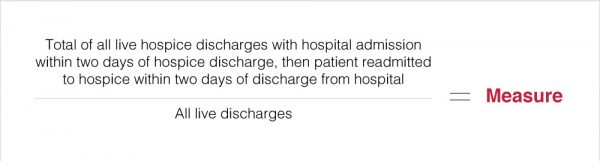
Index Earned Point Criterion: Organization score for Type 1 burdensome transitions falls below the 90th percentile nationally
How to Avoid Type One Burdensome Transitions
The high occurrence of type one transitions indicates these hospices may not be adequately discussing advance care planning with patients. A thorough review will bring to light any future procedures that can be performed before hospice admission.
Another option is to do the procedure in an in-patient unit if the hospice has one. Hospices should also consider a general inpatient (GIP) day. If the hospice is associated with a hospital, patients can receive procedures in a GIP unit and be kept on for skilled monitoring and observation.
Axxess Hospice, a cloud-based hospice software, provides a hospice workflow that updates automatically to comply with regulatory changes. Use these resources to improve CAHPS Hospice Survey results and create a more efficient HIS process.